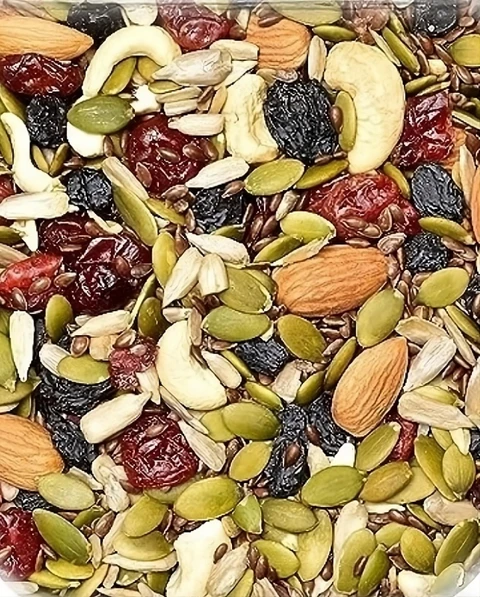
The festive dry fruit box is one of the most reliably disappointing things in Indian retail. It looks generous, it costs a lot, and the person receiving it works out within about thirty seconds that most of the volume is the cheapest thing in the box.
This is not an accident. It is what happens when a product is bought on appearance, given away unopened, and only ever assessed by someone who cannot complain.
What makes a box cheap
Volume filler. Roasted chana, cheap raisins and low-grade peanuts take up space at a fraction of the cost of the nuts people actually want. A large box with an impressive footprint is often mostly filler by weight.
Coated pieces. Sugar-shelled and yoghurt-coated items add weight cheaply, look colourful, and conceal the quality of whatever is underneath the coating.
Unstated ratios. Almost no gift box tells you the proportions. This is the tell. A box with a good ratio has every reason to print it; a box that does not print it has a reason for that too.
Packaging weight. Elaborate trays, dividers and secondary boxes can account for a startling share of what you are carrying. Compare net contents rather than box size.
What to actually check
Ask three questions, in this order.
What is the net weight of contents, excluding packaging? This single number defeats most of the theatre.
What is the ratio? If the box will not tell you, assume the most expensive item named is the smallest quantity present.
Can I buy the components separately? If a seller lists the same walnuts and the same saffron on their own shelves at stated prices, you can price the box yourself and see what the presentation is costing. If the components exist only inside the gift box, there is nothing to check against.
Choosing for the recipient
For a household that cooks, weight and usability beat presentation. A generous quantity of two or three good things is more useful than a small quantity of nine.
For a formal gift, presentation is doing real work and it is reasonable to pay for it — but pay for it knowingly. Know what share is contents and what share is box.
For a corporate list, the calculation is different again: consistency across dozens of boxes matters more than any single box being exceptional, and this is where an unstated ratio does most damage, because it varies between batches.
For anyone who might have allergies, nuts are obviously the concern, and mixed boxes make avoidance impossible. A single-ingredient gift — a tin of saffron, a box of dates — sidesteps this entirely and often lands better than a mixed box anyway.
The case against the mixed box
A mix ages at the speed of its fastest-spoiling component. Seeds and soft berries turn well before nuts do, so a box combining them has a shorter honest shelf life than any of its parts.
There is a reasonable argument that the best dry fruit gift is not a mixed box at all: one thing, of a grade the recipient would not have bought for themselves, in a quantity they will actually finish. A tin of properly graded saffron is a more considered gift than three kilograms of assorted filler, and usually costs less.
If you do buy a box
Buy one where the ratio is printed, the components are separately purchasable, the net contents weight is stated, and nothing in it is coated. Those four conditions eliminate most of what is on the market and leave you with something the recipient will actually finish.